FSSAI Food Packaging Guidelines 2026: What Every Food Brand Must Get Right on the Label
What is FSSAI Food Packaging Compliance?
Food packaging compliance in India means every pre-packaged food product sold in the country must carry specific, legally-mandated information on its label — governed by the Food Safety and Standards (Labelling and Display) Regulations, 2020 and the earlier Packaging and Labelling Regulations, 2011, administered by FSSAI (Food Safety and Standards Authority of India).
A non-compliant label is not just a design problem. It is a legal liability. Incorrect or incomplete labelling can result in product rejection during inspections, recall orders, heavy penalties, and reputational damage for the brand.
FSSAI is actively tightening enforcement, with updates to allergen declaration norms, Front-of-Pack Nutrition Labelling (FOPNL) rules coming in 2026–27, and increased scrutiny of veg/non-veg symbol usage across both physical packaging and digital advertising. Getting the label right at the design stage is always cheaper than a recall.
The 12 Mandatory Declarations on Every Food Label
Under FSSAI regulations, every pre-packaged food product sold in India must carry the following mandatory information. These are non-negotiable — no exceptions for small brands or niche products.
Product Name / Description
Must be the standard FSSAI-prescribed name or a clearly descriptive name. Must not be misleading. "Fruit drink" cannot be labelled "fruit juice" if fruit content is below 10%.
List of Ingredients
All ingredients in descending order of weight or volume. Compound ingredients must be declared with sub-ingredients. Food additives listed by INS number and functional class.
Nutritional Information
Energy (kcal), protein, carbohydrates, total sugar, fat, saturated fat, trans fat, sodium — per 100g/100ml and per serving. Small businesses below ₹12L turnover may be exempt.
Net Quantity / Net Weight
Declared in standard SI units — grams (g), not "gms". Millilitres (ml) or litres (l) for liquids. Placed prominently on principal display panel.
Date of Manufacture & Best Before / Use By
Both MFD (Manufacturing Date) and BBD/expiry are mandatory. Must appear on the label itself — not just embossed on the packaging. Format: DD/MM/YYYY.
Batch / Lot Number
For traceability and product recall purposes. Must be clearly printed on the label. "Batch No." or "Lot No." prefix required.
FSSAI Licence Number
14-digit FSSAI licence number of the manufacturer, packer, or importer. Must be printed on the label. The FSSAI logo itself is optional — the licence number is mandatory.
Veg / Non-Veg Symbol
Green dot (veg) or brown/red dot (non-veg) inside the prescribed square border. Colour and shape cannot be altered. Placement: principal display panel.
Manufacturer / Packer Address
Full name and complete address of the manufacturer or packer. For imported goods: name and address of the importer in India is mandatory.
Country of Origin
Required for all imported food products. For products made in India, this is optional but recommended for export-bound SKUs.
Instructions for Use / Storage
Where necessary for safe consumption — "Refrigerate after opening", "Best before date assumes unopened packaging". Mandatory if omission would mislead the consumer.
Allergen Declaration
The 8 major allergen groups (gluten, crustaceans, eggs, fish, peanuts, soybeans, milk, tree nuts) must be declared in a "Contains:" statement or highlighted in bold in the ingredient list.
Veg / Non-Veg Symbol — Getting It Exactly Right
The veg and non-veg symbols are among the most commonly misused elements on Indian food packaging. The rules are precise and non-negotiable.
Vegetarian Symbol
Solid green filled circle inside a green square border
Colour: Pantone 361 C /
#2E7D32
Min size: 3×3 mm (print) · 24×24 px (digital)
Background: white or light
neutral only
Non-Vegetarian Symbol
Solid brown/red filled circle inside a brown/red square border
Colour: Pantone 1795 C / #b91c1c
Min
size: 3×3 mm (print) · 24×24 px (digital)
Background: white or light neutral only
Using a green tick instead of the dot · Changing the circle to a triangle · Placing the symbol on a dark background · Using the wrong shade of green · Omitting the square border · Animating the symbol on digital packaging assets.
Nutrition Labelling — The Format FSSAI Requires
The nutrition information table must appear on every food label (with limited exemptions for very small businesses). FSSAI specifies both the nutrients that must be declared and the format they must appear in.
| Nutrient | Unit | Mandatory? | Notes |
|---|---|---|---|
| Energy | kcal | Mandatory | Calculated from protein, fat, carbohydrate using Atwater factors |
| Protein | g | Mandatory | Per 100g / 100ml AND per serving |
| Carbohydrates (total) | g | Mandatory | Includes sugars; sub-declare sugars separately |
| Total Sugar | g | Mandatory | Cannot omit even if zero — must state "0g" |
| Total Fat | g | Mandatory | Must sub-declare saturated fat and trans fat |
| Saturated Fat | g | Mandatory | Listed under Total Fat as sub-category |
| Trans Fat | g | Mandatory | Zero is permitted but must be declared |
| Sodium | mg | Mandatory | Not "salt" — must be declared as sodium in mg |
| Dietary Fibre | g | If claimed | Mandatory only if a fibre claim is made on pack |
| Vitamins & Minerals | varies | If added/claimed | Declare as % of RDA per serving if fortified |
FSSAI is implementing mandatory FOPNL for products high in fat, sugar, or salt (HFSS). Products in these categories will need a visible indicator on the front panel — not just in the nutrition table. Brands should audit their HFSS status now and design label templates with space for the FOPNL element.
Nutrient Claims — What You Can and Cannot Say
If your packaging makes any nutrient-related claim, FSSAI requires that specific thresholds are met before that claim is printed. These are the most frequently violated rules in FMCG packaging design.
| Claim on Pack | FSSAI Threshold Required | Status if Unmet |
|---|---|---|
| "High Protein" / "Protein Rich" | Min 12g protein per 100g solid / 6g per 100ml liquid | Violation |
| "Rich in Fibre" / "High Fibre" | Min 6g dietary fibre per 100g | Violation |
| "No Added Sugar" / "Sugar Free" | Max 0.5g sugar per 100g/ml | Violation |
| "Low Fat" | Max 3g fat per 100g solid / 1.5g per 100ml liquid | Violation |
| "Fat Free" / "Zero Fat" | Max 0.5g fat per 100g/ml | Violation |
| "No Preservatives" | No INS 200–299 class additives present in formulation | Violation |
| "Gluten Free" | Max 20 ppm gluten; lab certificate required | Violation without test |
Common FSSAI Label Mistakes — What to Avoid
These are the errors we see most frequently when reviewing food packaging designs at Sociapa Brand Studio — and all of them are avoidable at the design stage.
Pre-Launch Packaging Compliance Checklist
Before any new food product packaging goes to print, run through this checklist. Every item here is either a mandatory FSSAI requirement or a frequent cause of rejection at retail or inspection.
- Product name — standard/descriptive, not misleading, prominently placed on principal display panel
- Ingredient list — descending order of weight, all additives in INS format, allergens highlighted
- Nutrition table — all 8 mandatory nutrients declared per 100g/ml and per serving
- Nutrient claims verified — lab report in hand for every claim made on pack
- Net weight/volume — SI units only, on principal display panel
- MFD and Best Before/Expiry — on the label (not just embossed), in DD/MM/YYYY format
- Batch/Lot number — with "Batch No." or "Lot No." prefix
- FSSAI licence number — full 14-digit number of manufacturer/packer/importer
- Veg/Non-veg symbol — correct colour, correct shape, white background, on principal display panel
- Manufacturer/Packer address — complete postal address, not just city
- Allergen declaration — "Contains: [allergen name]" statement or bold in ingredient list
- Language compliance — English or Hindi (Devnagari) for all mandatory declarations
- Font size — minimum 1.5mm height for declarations; nutrition table minimum 1.5mm
Packaging Design and FSSAI Compliance — They Must Work Together
At Sociapa Brand Studio, the single most common cause of label redesigns is compliance information that was treated as an afterthought. The nutrition table was too small to be legible. The veg symbol was placed on a coloured background. The FSSAI number was buried in 0.8mm text on the back panel.
FSSAI compliance must be designed in, not retrofitted. A great food package design gives mandatory information its proper visual weight — because a label that passes inspection and can be read by the consumer at shelf is a better design than one that looks beautiful but triggers a product recall.
Every packaging design project at Sociapa begins with a compliance brief: what category, what claims, what certifications, what distribution — before a single visual is developed. This means our clients go from concept to print-ready artwork without compliance-driven redesign cycles. Design and compliance in one integrated process.
Need Packaging That's Both Compliant and Market-Ready?
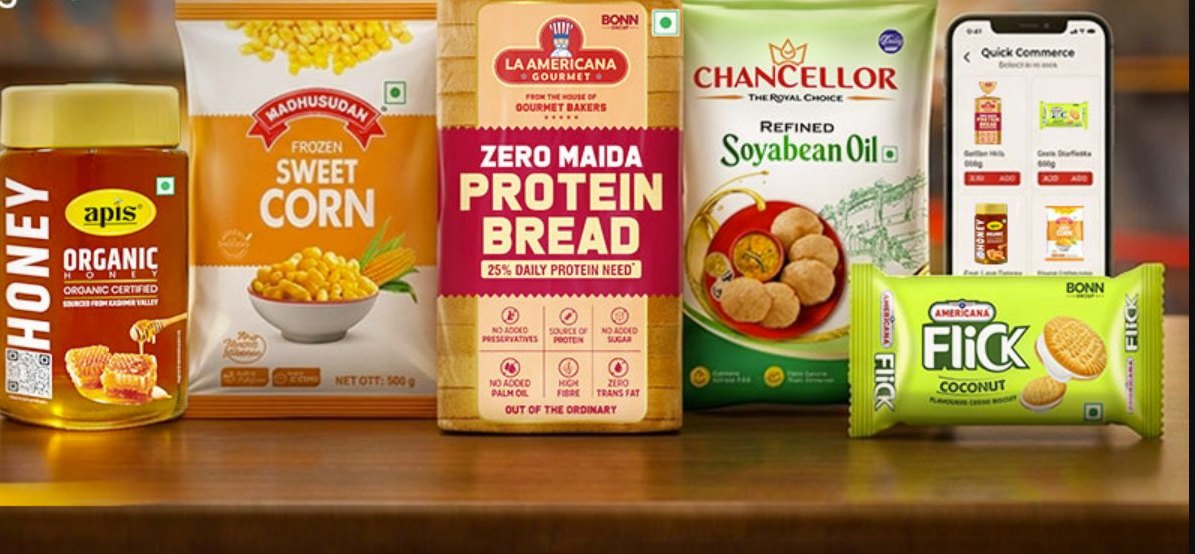
From label design to FSSAI compliance review — Sociapa Brand Studio helps food and FMCG brands get it right the first time. We've worked with Apis, Pansari, Bonn, La Americana, and more.
Get in Touch with Sociapa Brand Studio →Sources & Official References
- FSSAI Food Safety and Standards (Labelling and Display) Regulations, 2020fssai.gov.in ↗
- FSSAI Packaging and Labelling Regulations, 2011fssai.gov.in ↗
- FSSAI Food Safety and Standards (Packaging) Regulations, 2018fssai.gov.in ↗
- FSSAI FOPNL (Front-of-Pack Nutrition Labelling) Guidancefssai.gov.in ↗
Disclaimer: This article is for informational and educational purposes only and does not constitute legal advice. FSSAI regulations are subject to periodic updates — always refer to the official FSSAI website and consult a licensed food safety consultant or legal professional before printing final packaging artwork.